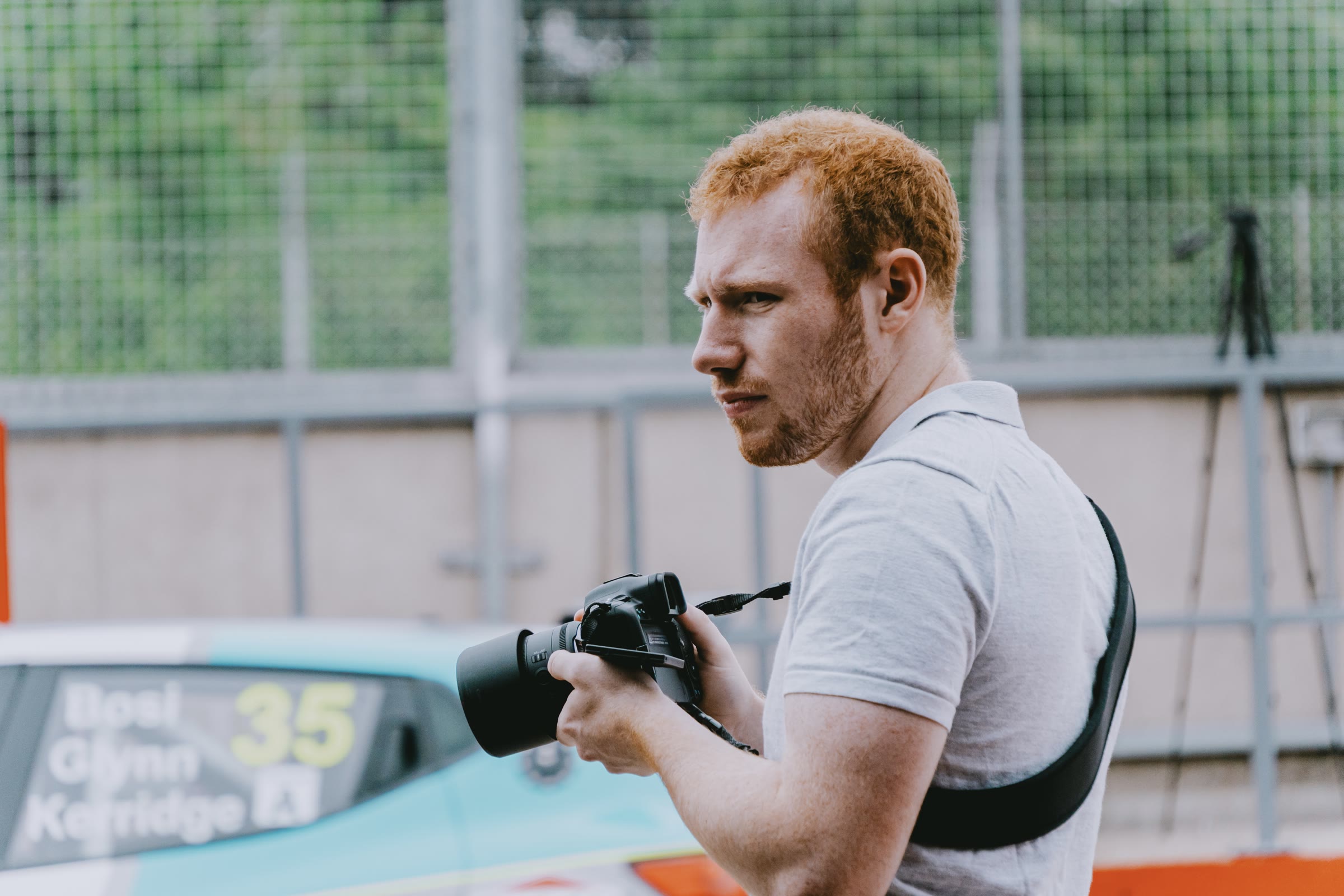
Digital lets me shoot thousands of frames in a day. A roll of 35mm gives me thirty-six. There’s no screen on the back and no delete button, so every frame has to be worth the film it’s on.
Slow down
That changes how you work. You slow down, read the light properly and wait for the moment, instead of shooting everything and sorting it out later. The habit comes back with you to the digital work: fewer frames, better ones.
Waiting for it
With film you don’t see anything until the roll is developed. The scans come back days later and that’s when you find out what you actually got. The wait makes every frame matter more, and it makes the good ones feel earned.
What film teaches the digital work
Film is a big part of why I grade digital by hand rather than taking it straight out of the camera. The colour, the grain and the way film holds on to highlights are often what I’m reaching for in the grade. More on that in why log footage looks flat.
Thirty-six decisions
The best thing film taught me isn’t about cameras at all. It’s that a limit makes you decide. Thirty-six frames, a word count, a 15-second Reel: the constraint is what makes the work sharper.
Written by Joseph Carey · 24 Oct 2026